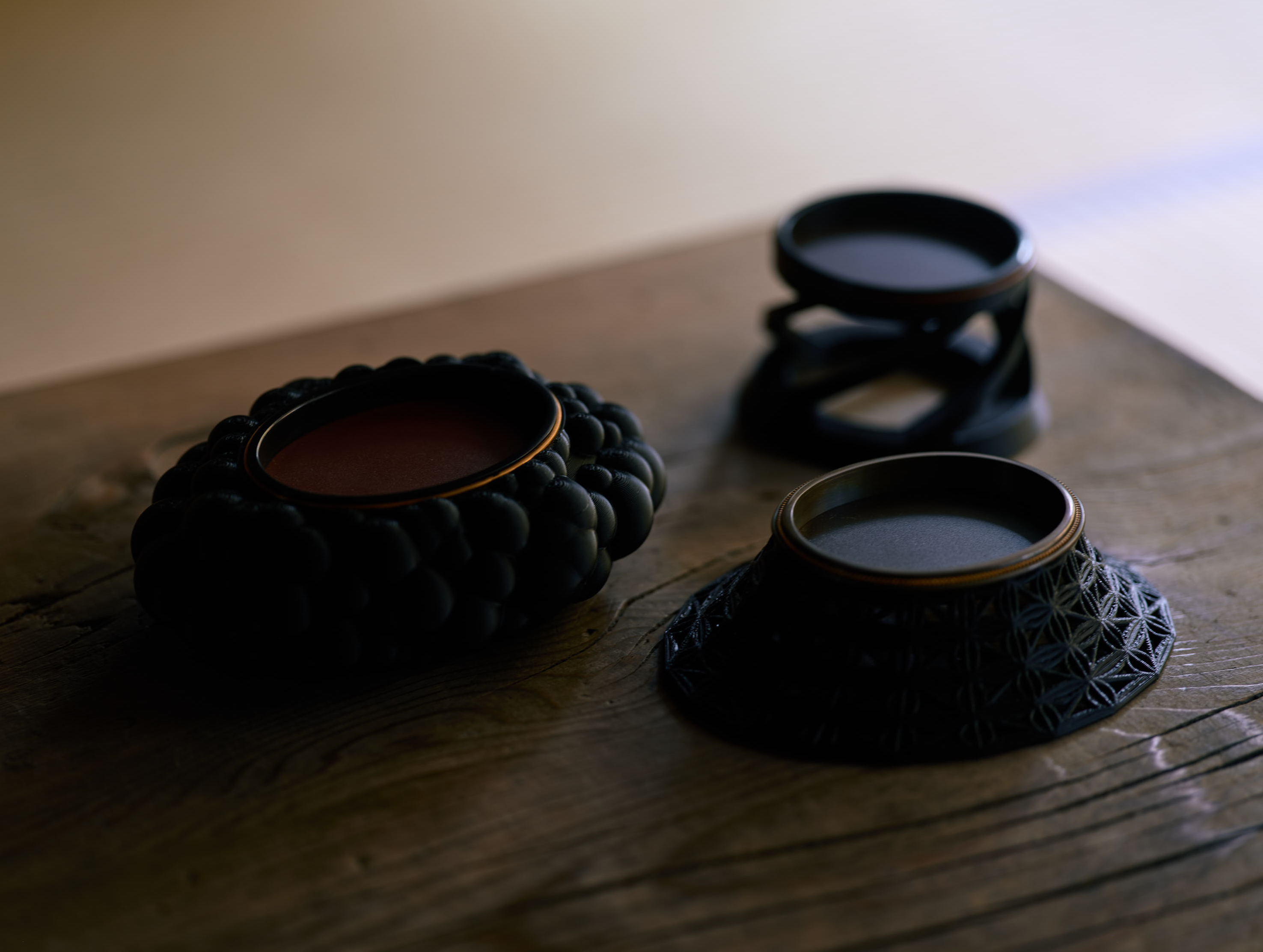
Fusuma are lightweight sliding panels traditionally used to divide rooms in Japanese interiors.
Each panel has a small recessed metal handle called a hikite. These handles were not merely
functional parts. Many were individually crafted, with delicate forms, patterns, and metal finishes,
becoming a distinctive part of Japanese architectural culture.
As fusuma have gradually disappeared from contemporary homes, many old hikite have also
lost their original purpose and remain unused. This work begins by looking again at these small
architectural fragments and reconsidering the forms already present within them.
The shallow hollows of hikite were originally made for the fingers to pull the sliding panels. By
separating them from the fusuma and changing their context, these hollows can become small
trays for holding objects.
For each hikite, a different 3D-printed resin base is designed in response to the shape and
character of the original metal piece. More than ten variations have been developed, each lifting
the hikite slightly from the surface and creating a new relationship between old metal and newly
printed resin. This contrast makes the outline, texture, and reflection of the metal more visible,
while allowing each fragment to retain its own individuality.
Rather than creating entirely new forms, the work finds new possibilities within forms that
already exist. Each fragment is reread through its own shape and given a new role, forming a
series in which inherited craft and contemporary fabrication coexist
Данни на творбата
Скулптура - МеталРазмер на Творбата - Ш. 5 | В. 10 | Д. 10
Създаден на 1 Септември 2026